Projects / Blogs

Leadership ยท Ownership

Applied Insights

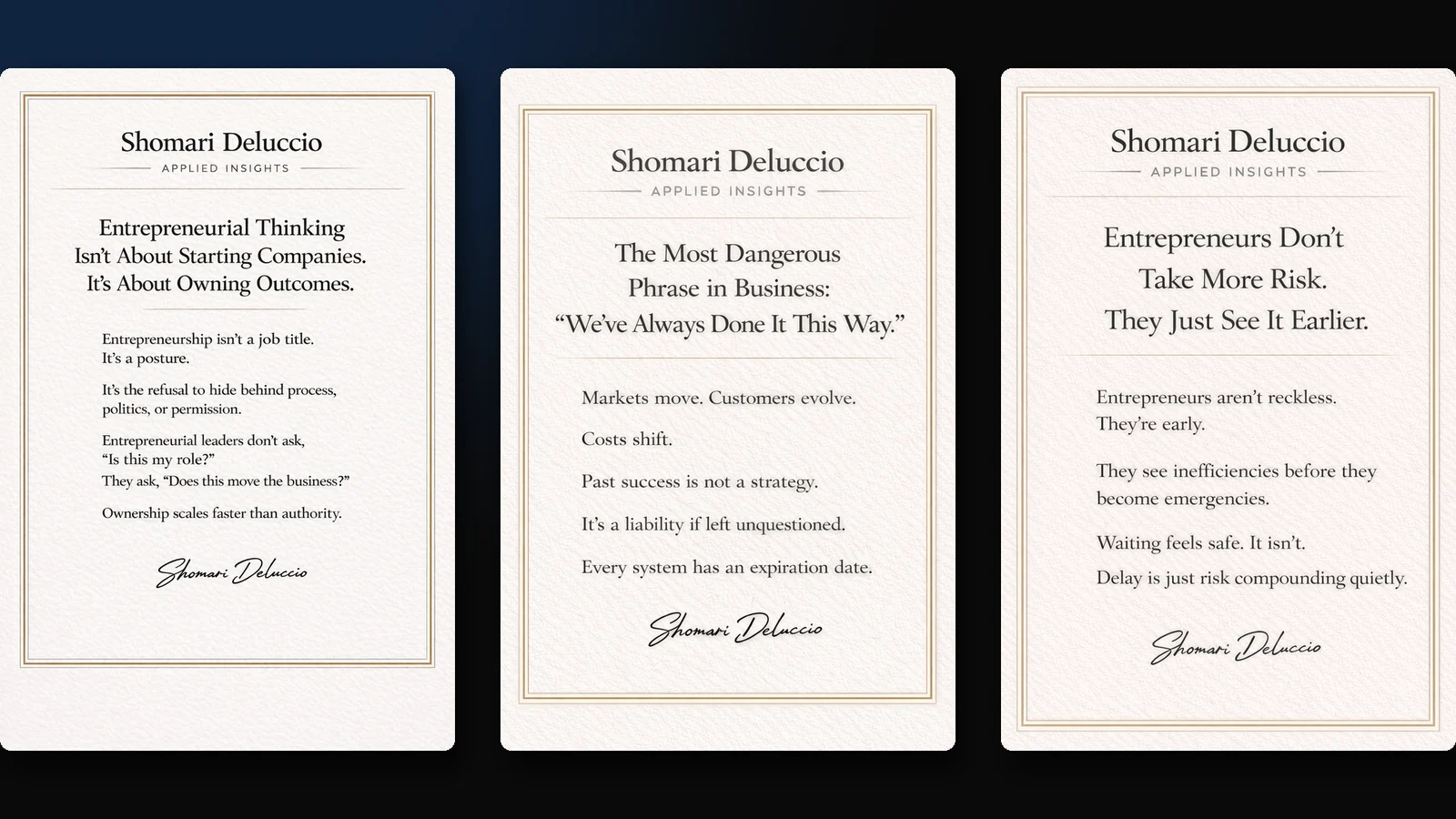
Three Applied Insights cards: owning outcomes, the most dangerous phrase in business, and seeing risk earlier

Six short notes from my Applied Insights series, on ownership, risk, process and execution. Select a card to see it full size.
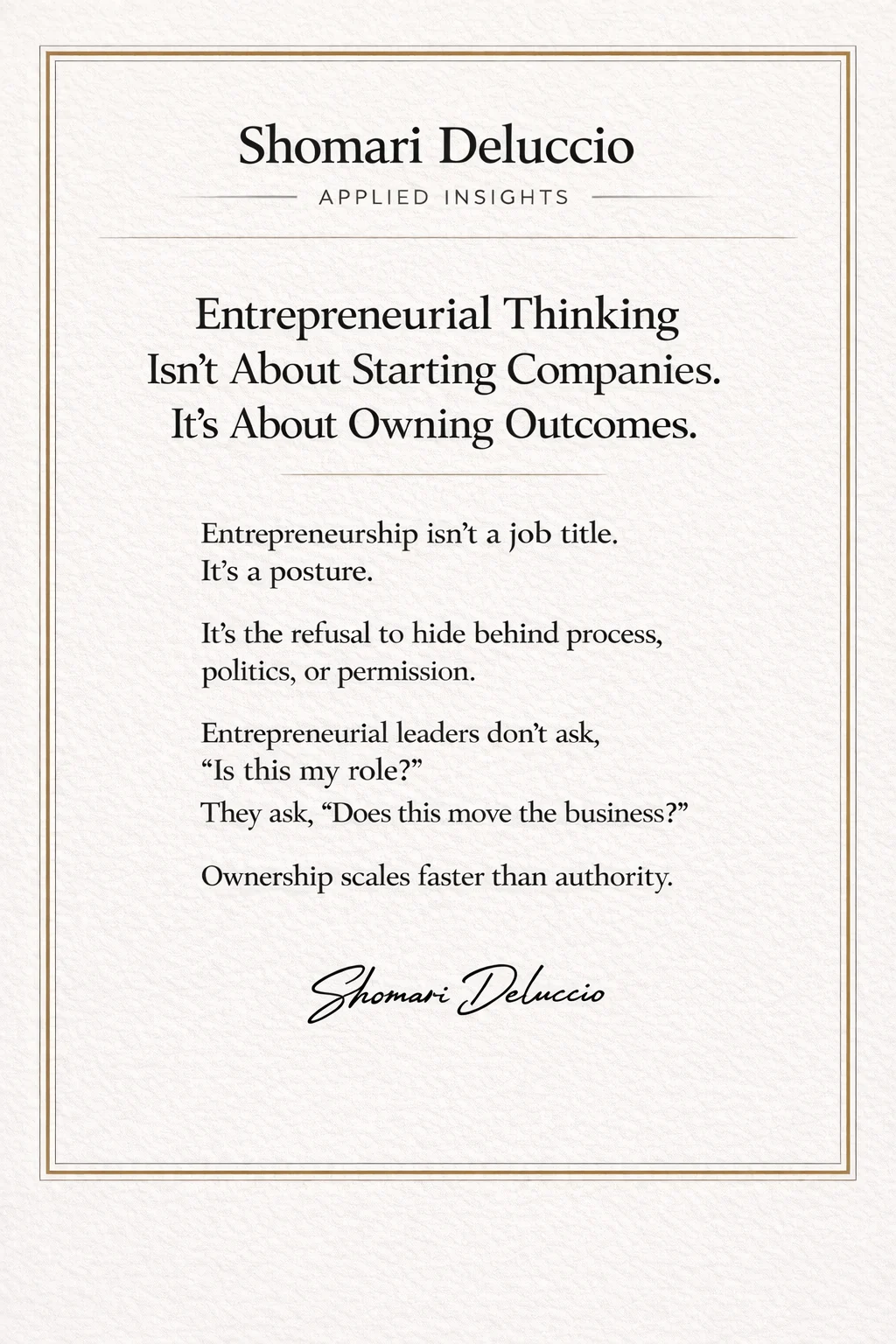
  1. Card 1 of 6. Entrepreneurial Thinking Isn't About Starting Companies. It's About Owning Outcomes. Entrepreneurship isn't a job title. It's a posture. It's the refusal to hide behind process, politics, or permission. Entrepreneurial leaders don't ask, "Is this my role?" They ask, "Does this move the business?" Ownership scales faster than authority.
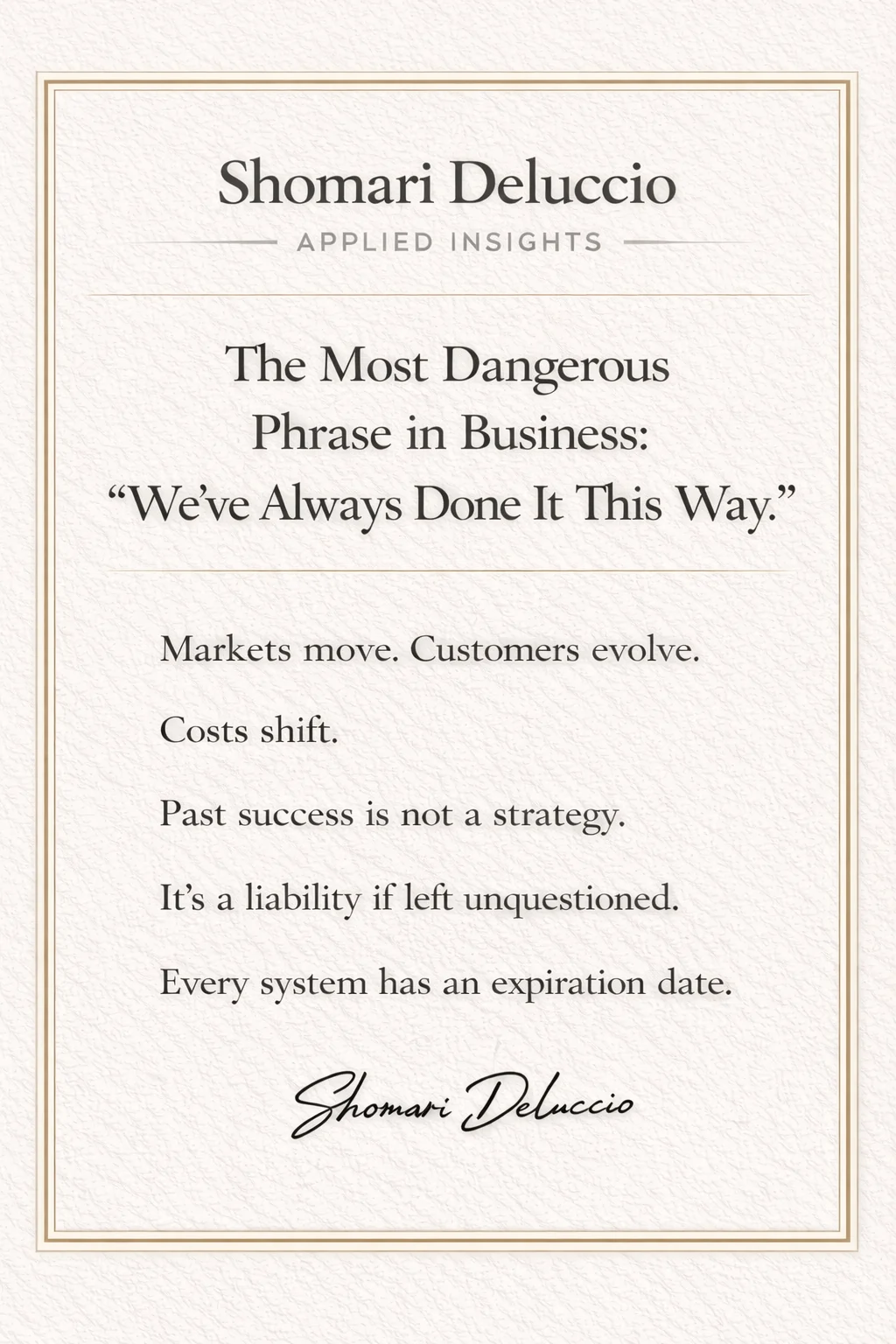
  2. Card 2 of 6. The Most Dangerous Phrase in Business: "We've Always Done It This Way." Markets move. Customers evolve. Costs shift. Past success is not a strategy. It's a liability if left unquestioned. Every system has an expiration date.
  3. Card 3 of 6. Entrepreneurs Don't Take More Risk. They Just See It Earlier. Entrepreneurs aren't reckless. They're early. They see inefficiencies before they become emergencies. Waiting feels safe. It isn't. Delay is just risk compounding quietly.
  4. Card 4 of 6. If You Can't Explain Your Business in 60 Seconds, You Don't Control It. Complexity is not sophistication. It's usually confusion in a suit. Reduce noise. Find signal. If your team can't repeat it, you don't own it.
  5. Card 5 of 6. Execution Is a Design Problem, Not a People Problem. People perform within the system they're given. Bad outcomes usually point upstream. Fix the design.
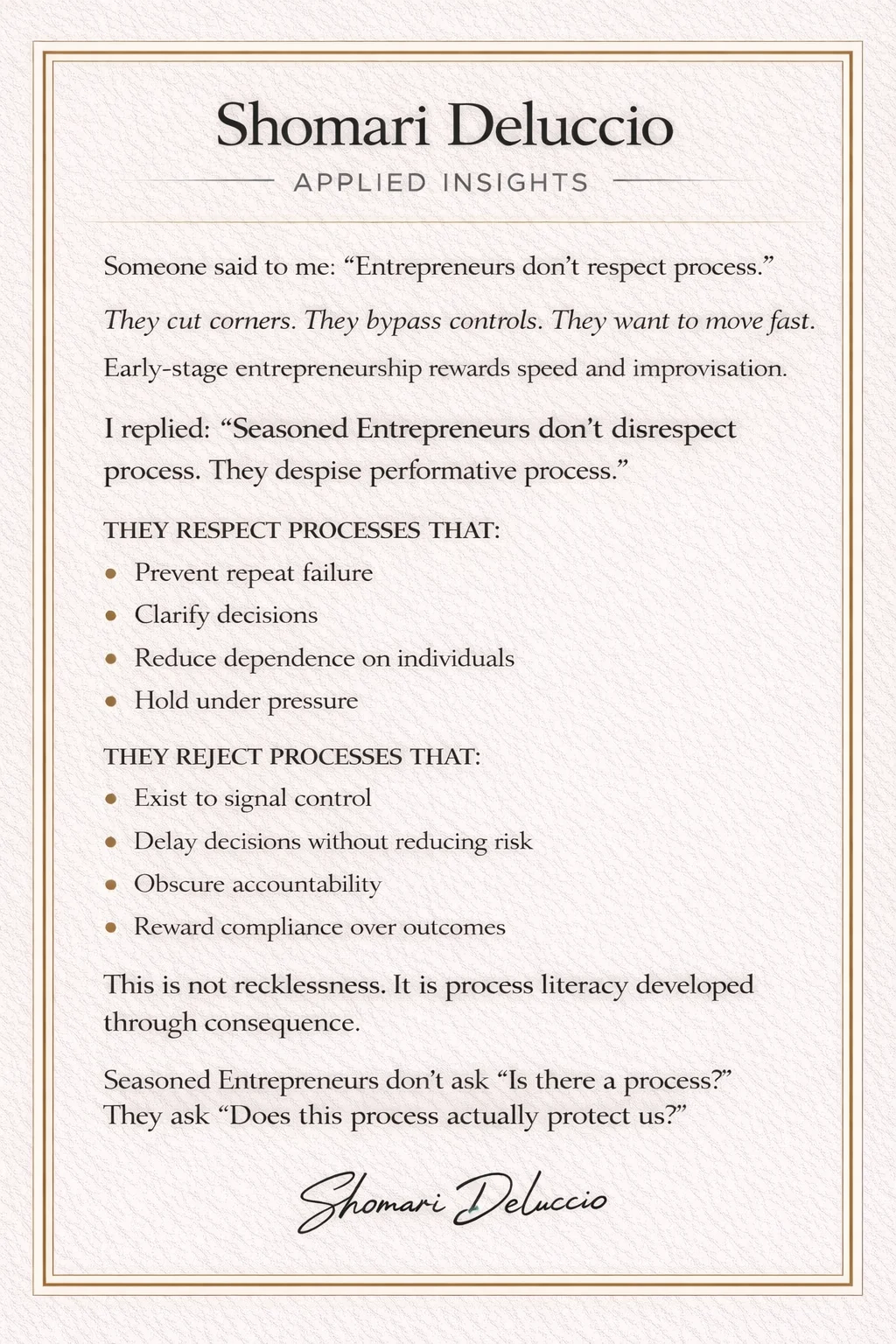
  6. Card 6 of 6. Someone said to me: "Entrepreneurs don't respect process." They cut corners. They bypass controls. They want to move fast. Early-stage entrepreneurship rewards speed and improvisation. I replied: "Seasoned Entrepreneurs don't disrespect process. They despise performative process." They respect processes that prevent repeat failure, clarify decisions, reduce dependence on individuals, and hold under pressure. They reject processes that exist to signal control, delay decisions without reducing risk, obscure accountability, or reward compliance over outcomes. This is not recklessness. It is process literacy developed through consequence. Seasoned Entrepreneurs don't ask "Is there a process?" They ask "Does this process actually protect us?"

← All posts